Friday, June 24, 2011

Aihole and Pattadakal


Please click on the pic for album

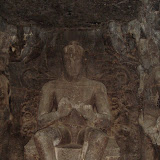
The structures at Aihole and Pattadakal give us the opportunity to see almost a millennium of evolution of Indian temple architecture all at one place. We have rock cut temples giving way to free standing temples, which further evolve along the two separate styles of the northern Nagara style, and the southern Dravida style, all right next to each other.

Wednesday, June 22, 2011

Voting to kill democracy

"So, this is how liberty dies: with thunderous applause."  - Senator Amidala, Star Wars II

Who has the final say in a constitutional democracy? The people or the constitution? India's Constitution, for example, was drafted and ratified by an indirectly elected Constituent Assembly. However indirectly they elected it, the people of India were the source of legitimacy of the Assembly. But, conversely, India did not become a republic, a democracy, and her people didn't have any of their fundamental rights (including their universal suffrage) until the Constitution was officially ratified. So, without a Constitution conferring voting rights on the people, where from did they derive their power to ratify the Constitution?

This might seem like a useless circular argument, but it serves to make my point that people exercised their right to vote even before the Constitution came into existence. The Constitution serves merely as a written record of what was agreed upon as the core of the law of the land, it need not be enshrined, and it should be remembered that it is not from the Constitution that we derive our power, but ourselves. But, that is not how the Constitution is seen today, it is seen as the immutable foundation for all that we build on.

Attempts to amend what is seen as the 'basic structure' of the Indian Constitution are resisted by the Indian Supreme Court. Some of the amendments that the Congress Government under Indira Gandhi, with its two-thirds majority, tried to push through during the Emergency were invalidated by the Supreme Court subsequently as subversive to the basic structure of the Constitution. So, if a Government with two-thirds majority cannot amend the basic structure of the constitution, then who can? There is no provision for referendum (though referendums have been conducted at a local level on a voluntary basis by the Government) in the Indian Constitution, so does that mean that the 'basic structure' of the Constitution is unalterable? Of course, I am not saying that I agree with the amendments that the Indira Gandhi Government passed: I am merely pointing out that it is odd that there is no apparent way to fundamentally change the Indian Constitution if we want to. 

Contrarily, people (or their representatives, as the case maybe) under extreme circumstances - as is shown beautifully in Star Wars - can be persuaded to voluntarily vote off their fundamental rights. The state of emergency that existed in India from 1975-77 or the one that has existed in Egypt for most of the past fifty years are cases in point. More recently, international observers of Turkey were worried that the AK Party under Mr. Erdogan would unilaterally create a new, more authoritarian constitution (a 2010 referendum voted for creating a new constitution) if they gained the required two-third vote in the 2011 elections, and were relieved when they didn't. 

So, maybe the Indian Supreme Court does have a legitimate reason for its attempts to protect the Indian Constitution from the vagaries of the Indian voters and their representatives. Perhaps new amendments could be made to the Constitution to make it more difficult to amend it (does anyone not see the irony of it?), by putting in more safeguards. But, when that is done, the Court must acknowledge that this is a democracy, and the people, through whatever means, must have a possible way to to amend their Constitution, even fundamentally if they want to. Again, it is possible that they might vote to change the Constitution in a manner that is detrimental to themselves, but that is their choice.

Hampi


Please click on the pic for album

Saturday, June 18, 2011

Alien within

I watched Cheeni Kum yesterday, and while I enjoyed it, I could not suppress my thoughts on the irony of the whole situation. We are a country with a history of young girls (still children sometimes) being married off to older men for a bride price - something that, even after being outlawed, happens with disturbing regularity in rural India - and here we have an entire film dedicated to the romance between a young woman and a much older man, and the difficulties they face on their way to getting married, with the theme being labelled as 'bold' in the Indian media. 

I am not questioning the relevance of the film, rather who it is relevant to. Given the manner in which the subject was dealt with, and the location where it is set, it is a reasonable assumption to make that it was made with India's diaspora and its urban elite in mind. And they did their job well, the denizens of India's rural landscape would find alien the film's language, moral qualms, the problems of its characters and its so called 'boldness'.

The changes that happened over the last twenty years in India's urban centres happened too fast, and increasingly, the gap between the urban elite and rural population looks too wide for any significant sympathetic understanding and exchange of each other's perspectives to take place. The urban elite constantly live with one foot outside India, and the rural population (I am including recent migrants to cities here), even with the attempts made to increase access to internet, still live in the same small world that they lived in twenty years ago (a few years ago, I was talking to a few of my father's subordinates at their dam site. I told them that I lived in England, two hours from London, so one of them asks me, so you live in Paris then?). The rural population, for the most part, only has access to myths of urban life and the foreign lands that city dwellers concern themselves with. 

The urban elite is properly outraged by the farmers' suicides, child marriages, honour killings...that happen in the villages, but this outrage is the same as the one reserved for the civil war in Libya or state suppression in China: it is news yes, but it is not felt as something immediate, not felt as something happening in 'our' society. A migrant worker once told me how he had saved up for a year working in the city, took a sizeable loan, and with a sense of achievement had a bore-well dug on his land back home (he hit water after three attempts). But, a more influential neighbour, now knowing where the water was, dug a deeper bore-well not five feet from his, stealing all his water. Crying, he told me how he had contemplated suicide. I listened, and I sympathised with him, but the problem itself was totally alien to me. 

I am not saying that the urban elite do not encounter poverty and misery - there is plenty of both to go around in Indian cities - but they relate to it as a purely urban problem, they don't associate it with rural poverty. They live in the city, with an eye on the outside world, and rural India is some place else.

I am sure a decade or two from now the situation will be different. Access to information, becoming easier everyday, hopefully, will help bridging the gap between the two. But until then, they will have to live with not really understanding each other.